
#332 Childhood Sexual Abuse and your Low Libido with Gwen Levey TRIGGER WARNING
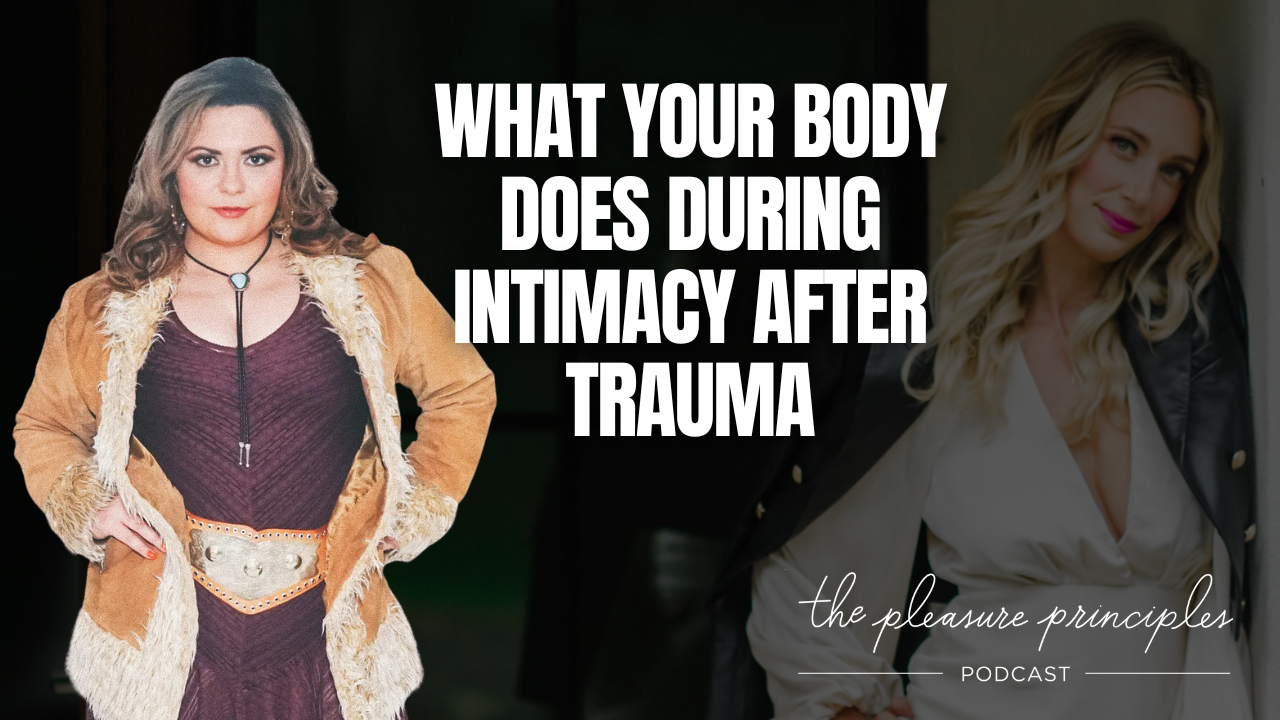
Probably 70% of my clients have a history of childhood sexual assault. Most of them come to me talking about low libido, disconnection, and no desire. And underneath almost every single one of those stories is something they have never said out loud, or something they spent years telling themselves did not count.
I know that story. I lived it.
LISTEN ON APPLE | LISTEN ON SPOTIFY | LISTEN ON AMAZON MUSIC
Take the FREE SUPER TRAITS QUIZ HERE
I was around 9 or 10 when it started. And for almost two decades, I told myself it was not assault because it was not penis in vagina. That was the version of assault I had been taught to recognize, so everything else, I buried. I told myself I was fine.
It was not until a therapist looked at me and said, "He was an adult. You were a child. None of this was okay," that I started to crack open what I had been carrying. That is how deep the minimizing goes.
Gwen Levey is a viral Nashville rocker, survivor, and co-founder of the Rise Above Justice Movement. She told her story publicly for the first time at a press conference in front of the Tennessee State Capitol, and she brought that same honesty to this conversation.
The Body Keeps Score in Ways We Do Not Always Recognize
Gwen was six years old when her assault happened. She buried it, protected her family with her silence, and spent years disconnected from her own body without fully understanding why. During intimacy, she would just not be there fully. She would go somewhere else entirely.
I call it going to your trauma place. It is the same place you went when you were being touched without your consent. Your body learned to leave. And then years later, in a completely different situation, with someone you chose, your body still goes there. Not because something is wrong with you. Because your nervous system is doing exactly what it learned to do to keep you safe.
Gwen also developed an eating disorder. Food became comfort, and her relationship with her body became a battleground. The why, for her, was the same why it is for so many women I work with. Unprocessed trauma lives in the body. It shows up in our health, our hunger, our desire, and our capacity to be present in our own skin.
Trauma Is Not Just Emotional. It Is Brain Damage.
One of the most important things Gwen shares is something she learned from an Epstein survivor. Sexual trauma is not viewed as a physical trauma, but it is actually brain damage. Your brain gets damaged.
This is not a metaphor. This is neuroscience. And it is why so many survivors feel like they are doing everything right and still cannot seem to move forward. Gwen found brainspotting, which is similar to EMDR, and describes it as literally healing the part of the brain that was damaged. That is what neuroplasticity makes possible. We can heal in ways that were not available to our mothers and grandmothers, who carried their trauma in silence until it became their whole body.
The Systems Are Not Built for Survivors
Part of what makes healing so hard is that the systems survivors are told to trust are not built for them. Gwen tried to get a restraining order in Tennessee after her domestic violence relationship ended. She was told her abuser had to physically come onto her property and threaten her first. She was told she would have to show up in court and face him in person.
She had already been raped. She had already been stalked. And the system's answer was essentially, " Come back when it gets worse.
The systems are set up by men for men. They are set up to protect the perpetrator and make it almost impossible for victims to get justice. And for women who outwardly present well, who are educated, who earn their own money, the dismissal often runs even deeper. You go to a nice house. There is food in the fridge. Everything looks fine. Nothing about that means a woman is safe.
People Pleasing Is Not a Personality Trait.
It Is a Survival Response.
Gwen makes a point I think about constantly in my clinical work. Because of what happened to her in childhood, she became a people pleaser. It was really hard for her to say no. And abusers take advantage of that. They find it. They use it. They keep you controlled with it.
This is what I see in my clients with Super Traits. High empathy. High responsibility. Hyper-vigilance. These are not character flaws. They are adaptations. They developed because at some point, reading the room and never causing conflict was how you stayed safe. And then those same traits become the door that certain people walk right through.
Healing means understanding where those patterns came from. Not blaming yourself for having them.
Healing Does Not Happen in a Straight Line
Gwen is 31 and has been doing this work for over a decade. She describes it as a constant healing cycle. And she says she feels strong. Not fixed. Not finished. Strong.
That is what this work actually looks like. It is layers. It is therapy and community and purpose and sometimes emergency sessions because something dropped in the news and you needed somewhere to put the rage. What Gwen found in Rise Above Justice Movement is what I see my clients find when they stop isolating with their story and start being witnessed. The healing accelerates. The shame loses its grip. You stop protecting everyone else with your silence and start protecting yourself with your voice.
That is the work. And it is possible.
Join the Rise Above Justice Movement
Connect with Gwen
Barefoot and Pregnant (Listen Here)
https://www.gwenleveyandthebreakdown.com/
Connect with Dr. Jordin:
Two spots remain for summer private coaching. Not a course, not a group program. A series of deep one-on-one sessions where we map out the dynamic you're inside, untangle the over-accountability you've been carrying, and rebuild your life and relationships around pleasure, physiologically and somatically. APPLY NOW
And if you want to go deeper on super traits, over-functioning, and building a pleasure-centered relationship and life, the Pleasure-Centered Society on Substack is where that work lives. JOIN HERE
If you want to understand the specific dynamic you're inside before going deeper, the Pleasure Path Assessment is a private one-on-one deep dive. Book HERE

Hi! I'm Jordin, owner and creator of The Pleasure Collective
I believe that high-achieving women deserve deep intimacy, fulfilling relationships, and pleasure in every area of their lives—without sacrificing their success. My work helps women experience more energy, more connection, and feel fully seen, supported, and loved. I’m here to guide you in breaking free from burnout, prioritizing pleasure, and creating lasting fulfillment—emotionally, physically, and relationally.
